




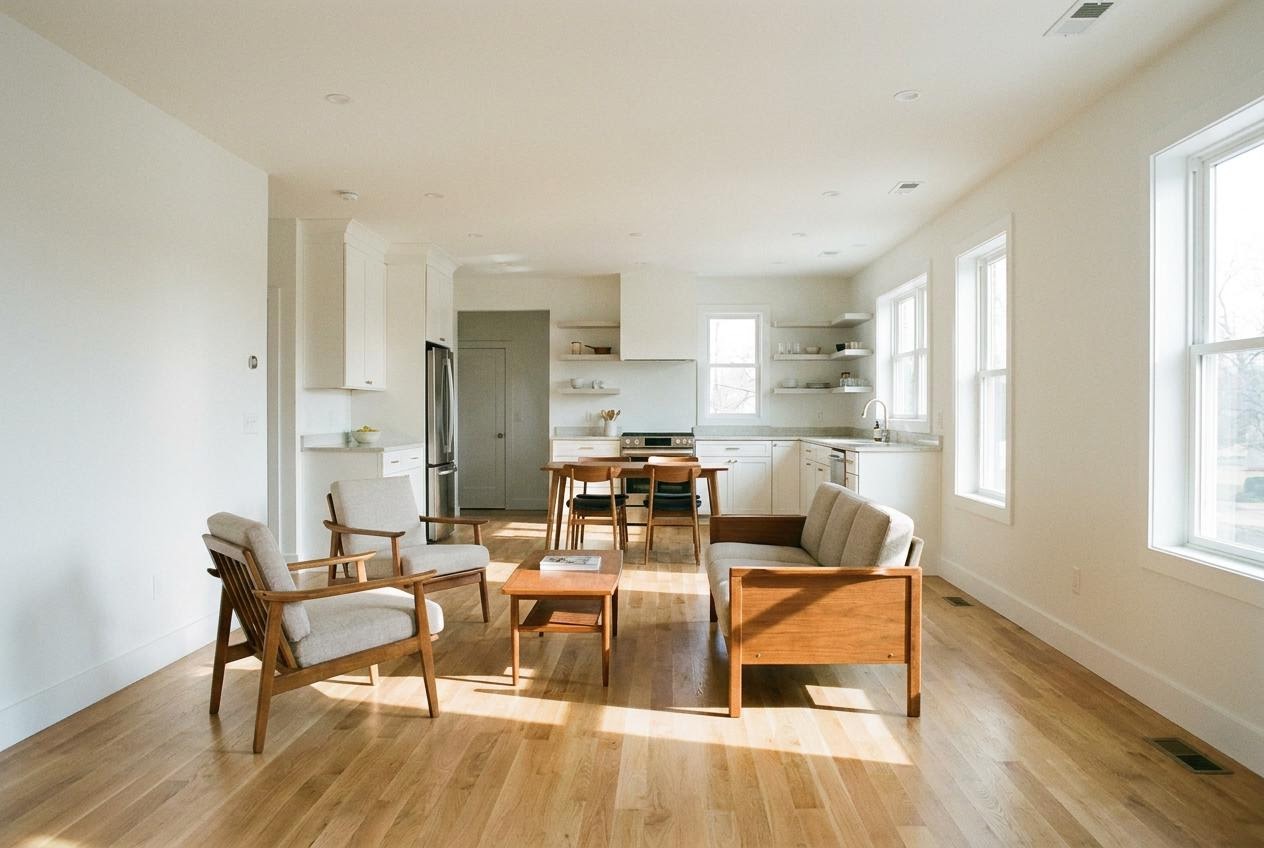
A dry house is not yet a finished house. Even with normal moisture readings, you are left with opened walls, flooring that is gone and exposed subfloor. The repair phase is where reconstruction happens. Our team in Lynchburg replaces what could not be saved and matches it to what was there before, so the room looks like a room again and not a job site.
No two repair jobs are the same size. A minor loss can need just a couple of feet of wallboard plus baseboard and a coat of paint. At the bigger end, expect doors, trim, cabinet boxes, hardwood or laminate flooring, subfloor, full drywall sheets and insulation. We replace materials like for like where possible, and we tell you plainly when an exact match is not available so you can choose.
Nothing gets closed up until it is dry. A moisture meter has to show normal levels in the subfloor and framing before new material is installed. Cover wood that is still damp, and mold grows unseen behind the new paint. You also receive a written scope and schedule ahead of the work, which spells out what gets rebuilt and when.
Signs It Is Time for Water Damage Repair
Catching these issues early helps you avoid costly problems and protect your property. Here are the most common indicators that it's time to call a professional:
- Drywall was cut out during drying and the wall cavities are still open.
- The edges of your laminate or vinyl planks have puffed up, curled or pulled apart.
- A leak overhead left the ceiling drywall cracked, sagging or falling apart.
- Wood floor boards stayed raised, cupped or crowned even once the moisture was gone.
- The lower part of cabinet sides or bases feels soft, looks swollen or is peeling.
- Paint is bubbling, peeling or stained brown where water ran down the wall.
- The subfloor gives or feels spongy underfoot where water once stood.
Don't Wait Until It's an Emergency
Many water damage problems start small but can escalate quickly into costly emergencies. Call Lynchburg Restoration at (623) 352-0605 at the first sign of trouble.
Ready to Solve Your Water Damage Repair Problem?
Call Lynchburg Restoration for fast, reliable service.
Get Help: (623) 352-0605How Our Water Damage Repair Works
Our systematic approach delivers quality results on every project. Here's how we handle water damage repair from start to finish:
Verify Dryness First
Our crew meters the remaining drywall, the subfloor and the framing one last time. Reconstruction only begins once those numbers are at normal levels for the material, so nothing damp gets sealed in.
Put the Scope in Writing
You receive a room by room list of what will be replaced, the materials we plan to use and the expected schedule. If a claim is open, we line the scope up with the adjuster.
Rebuild the Structure
We refill open cavities with insulation, hang, tape and finish drywall, and repair the subfloor. After that we install trim, cabinetry and floors, ordering the work so completed surfaces are not damaged.
Final Finishes and Walkthrough
We match texture, prime and paint, and reinstall doors, baseboards and hardware. Together we then walk through each room, and every listed item is corrected before the job is closed.
Common Water Damage Repair Questions
DIY vs. Professional Water Damage Repair
While some minor restoration tasks can be handled by handy homeowners, most water damage work requires professional expertise, specialized equipment, and proper safety training. Here's a comparison:
| Factor | DIY Approach | Professional Service |
|---|---|---|
| Timeline | Several weeks of spare weekends | A crew working in planned order |
| Dryness check | Looks dry, so it must be | Metered and verified, then closed |
| Claim paperwork | Writing your own estimate | Scope written in insurer format |
| Drywall finish | Patch outline shows through paint | Seams taped, texture matched |
| What is behind the wall | Covered over without knowing | Wet areas already mapped during drying |
Want a Professional Opinion?
We provide honest advice and free estimates on all water damage repair work.
Get Help: (623) 352-0605How to Prevent Water Damage Repair Problems
A little prevention goes a long way in avoiding expensive restoration emergencies. Here are our expert recommendations:
- Give fresh paint, caulk and flooring adhesive time to cure before wet mopping or heavy use.
- Before a contractor closes a floor or wall, request the final moisture numbers.
- A water stain should stay unpainted and unpatched while its cause is still active.
- Laundry rooms, bathrooms and kitchens should be rebuilt with moisture resistant wallboard and proper backer board.
- Caulk around tubs, showers and sinks yearly so water stays out of the wall.
- Take pictures of damaged materials prior to removal, since the insurer may want them later.
What a Professional Brings to Water Damage Repair
This is not the same as a standard renovation project. The person rebuilding needs to know what the water did, where it went and whether the structure behind the wall is truly dry. Because our crew has the drying-phase moisture logs, it knows where studs were wet, what subfloor received treatment and which areas deserve another check. With that history in hand, problems do not get buried under fresh paint and new drywall.
Then there is the craft of making things match. If the patch stands out, it reminds you of the damage daily. Wall texture is blended, paint is feathered out to natural breaks, and flooring is sourced to line up with the boards already there when available. When a match is not possible, we lay out options, such as replacing flooring to a doorway. Our team pulls any permits the job needs and sends updates to your insurance company.
Get Water Damage Repair Help Today
Don't let water damage problems get worse. Call Lynchburg Restoration now for prompt, professional service.
Get Help: (623) 352-0605